

















Publish Date
November 27, 2019
Social Share
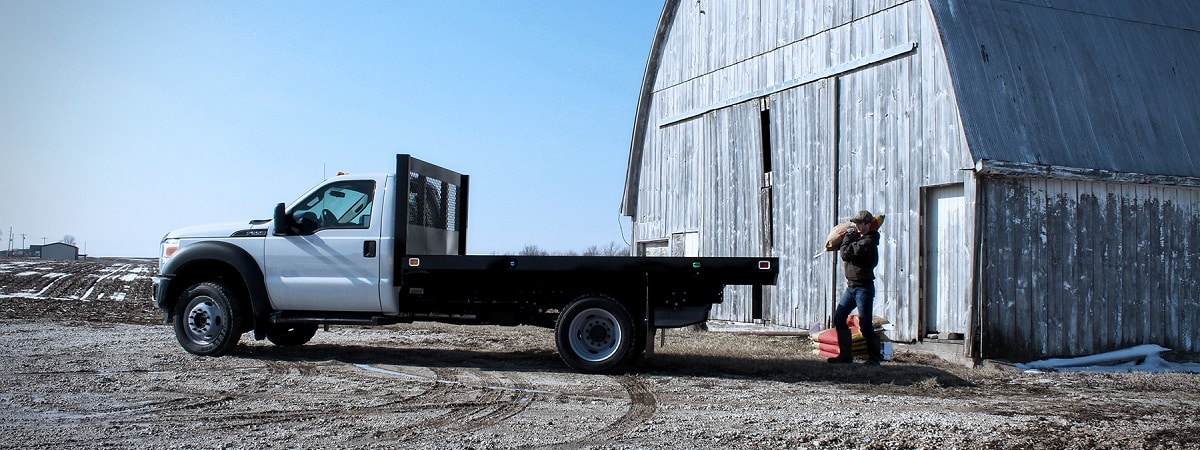
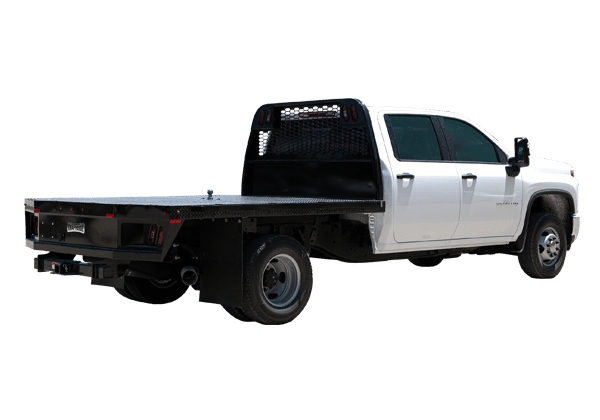
Platform bodies, flatbeds, flatdecks, there are numerous names used across North America for this versatile material hauling product. On the surface, a platform body seems so simple. Yet spec’ing the wrong flatbed for your application can create an inefficient, and even dangerous, work truck. Use these six tips when it is time to buy your next platform body in order to create the right configuration for your job.
1. Body Length
What you haul on your flatbed will have a direct impact on the length of the body you choose. Make sure your platform body is long enough to safely haul. Flatbeds can vary in length from 7’ up to 26’, so choose wisely.
2. Sides
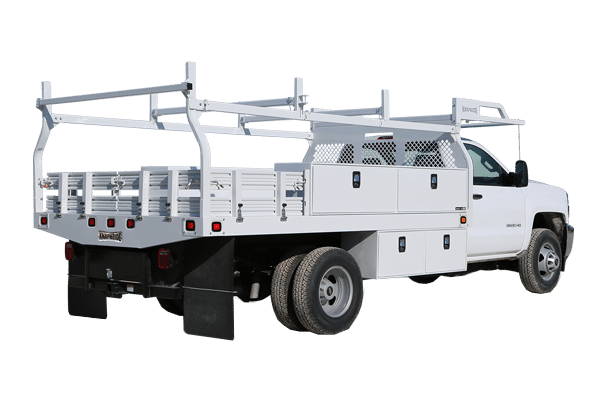
Most platform bodies come standard with stake pockets which can accept a wide variety of side options for better cargo retainment. Stake sides, solid sides, landscape racks and drop sides are just a few of the side options.
3. Floor Type
Your floor type should be based upon the weight of the load along with environmental factors. Typically, tongue-in-groove pine is the standard floor construction. However, many other options exist that may be a better fit for your application. Smooth steel, treadplate, apitong, polyboard and even wood with steel overlay (severe applications) are all common flatbed floor choices.
4. Secure Load
Transporting materials safely should be the top priority with operators behind the wheel of a platform body. Consider options that will help prevent the load from shifting including integrated D-ring tie downs, rope hooks, underbody sliding tie-down channel and cargo straps.
5. Bulkhead
In the event of an accident or hard stop, a bulkhead can be the difference behind life or death for the operator and any occupants. Choose a bulkhead that completely covers the back of the cab yet provides visibility out the rear window (punched window). If you haul heavy loads, choose a weld-on style bulkhead over a drop-in style bulkhead for additional durability.
6. Trailer
Haul a trailer? Be sure to spec a flatbed with a receiver or pintle hitch depending upon the trailer you need to pull. Regardless if you need a rear hitch or not it is suggested to utilize an ICC bumper for under-ride protection and ensure you are compliant with Federal Motor Vehicle Safety Standards.